|
Per the CDC, cavities (also known as caries or tooth decay) are the most common chronic disease of childhood in the United States. Untreated cavities can cause pain and infections that may lead to problems with eating, speaking, playing, and learning. Children who have poor oral health often miss more school and receive lower grades than children who don’t.
|
|
|
National Institutes of Health recognized April as National Stress Awareness Month to bring attention to the negative impact of stress. Managing stress is an essential component of a healthy lifestyle. Knowing how to manage stress can improve mental and physical well-being as well as minimize exacerbation of health-related issues. The Mental Health American (MHA) provides some tips on how to reduce your stress by utilizing a Stress Screener.
|
|
|
|
Five Things to Know About Whooping Cough |
|
|
The American Lung Association published five things to know about pertussis (whooping cough). The webpage includes information on risk factors, statistics, symptoms, vaccines, and prevention strategies.
1. Whooping cough most commonly affects babies and young children but can affect anyone at any age.
2. Pertussis is known for the distinct "whooping" sound made at the end of a coughing episode, giving it the name.
3. Vaccines are available to help prevent whooping cough across the lifespan.
4. The use of cough medications is typically not recommended in the treatment of whooping cough.
5. There are several steps you can take for managing pertussis and reducing the risk of spreading it to others.
|
|
|
|
|
Alliance for a Healthier Generation shared 10 Tips for Taking Screen Breaks for parents and caregivers. While computers, televisions, and phones can be helpful, it is important to take regular breaks from the screens. Physical inactivity, such as sitting behind a screen all day, can increase one’s risk of cognitive and physical health issues, and may get in the way of family time. However, there are many ways we can balance screen time, physical activity, and family connection.
|
|
|
Texas Health and Human Services offers help for families. Community mental health services are usually provided at an office or in the home. Services support families to make positive changes that help children recover from mental illness and foster resilience.
Mental health services start with a thorough assessment and developing a plan to address goals identified by the child and family. For more information please visit the Texas Health and Human Services website.
|
|
|
|
|
If students have vomiting, diarrhea, rash of unknown cause, pink/reddened eyes with or without drainage, congestion or cough, these may be additional reasons to keep students home for monitoring until well. Students MUST remain home until they are AT LEAST 24 hours-fever free without the use of fever reducing medications.
Please help us keep WCE healthy by keeping students home when they are not feeling well!
|
|
|
All referrals for school health screenings have been sent home. If you have received a referral for vision, hearing, acanthosis nigricans and/or scoliosis please review them, have your student seen by the physician and return the completed referral to the school nurse.
We are required to track all referrals sent and I will begin following up on all non-returned referrals in January/February. The break from school is a great time to make those appointments!
|
|
|
|
|
|
Please remember all medication must be dropped off and picked up by an adult. If possible, please bring completed forms and medication at the same time. Please also note, all medication being dropped off must be given directly to the nurse and parents must sign off on amount delivered. Thank you! |
|
|
|
Please remember to include a change of clothes in your student's backpack. Spills and accidents can occur at school and having a spare set of clothing can be helpful. Please remember to send in a bag labeled with your student's name when possible. |
|
|
|
|
|
Check Their Heads!
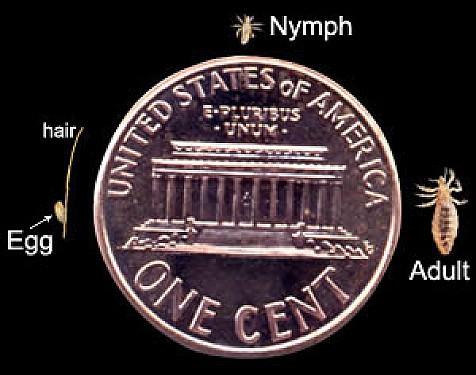
Just say the word and everyone starts scratching their head. As you can see from the image, they are extremely small. They attach to the hair shaft & feed on blood from the scalp, which then causes the itchiness. Contrary to popular opinion, lice cannot fly or jump. They spread through close contact or sharing, hats, hair accessories, brushes or pillows. Thorough cleaning of furniture, rugs, car seats, and throw pillows will eliminate the infestation, along with washing bed linens, clothes, & towels in hot water.
Avoid head-to-head (hair-to-hair) contact during play and other activities at home, school, and elsewhere (sports activities, playground, slumber parties, camp). Do not share clothing such as hats, scarves, coats, sports uniforms, hair ribbons, or barrettes. Do not share combs, brushes, or towels.
As a reminder, many times the nurse is not notified of head lice, therefore, it is important to be vigilant at all times. Head checks should be part of your child’s routine hygiene regime.
|
|
|
2021 © All Rights Reserved |
|
|
|